
Breaking the Distance Barrier: How Bicycles Are Transforming Education for Rural Students in Kagera

In the rural communities of Kagera Region, access to secondary education is often determined not by ability or ambition, but by distance. In districts such as Muleba District, Bukoba District, and Biharamulo District, students routinely walk between five and ten kilometers each way to reach school. These daily journeys begin before sunrise and end after dark, leaving many learners physically exhausted before lessons even begin. For girls, the challenge is even greater, as long and isolated routes expose them to risks of harassment and gender-based violence.
Recognizing that transportation poverty is a critical barrier to education, Vijana Bicycle Centre (VBC), with the support of Velafrica, implemented the 2025 Bike to School (B2S) initiative to promote safe and equal access to education through mobility.
Delivering Access, Promoting Equity
In 2025, VBC distributed 200 high-quality, durable bicycles to vulnerable secondary school students across the three districts. Beneficiary selection followed a transparent and structured process, prioritizing students who walk more than five kilometers daily, come from low-income households, and demonstrate strong academic commitment.
Gender equity remained central to the initiative. Of the 200 beneficiaries, 150 were girls (75 percent) and 50 were boys (25 percent). This targeted approach reflects the disproportionate barriers faced by girls in accessing and completing secondary education in rural areas.
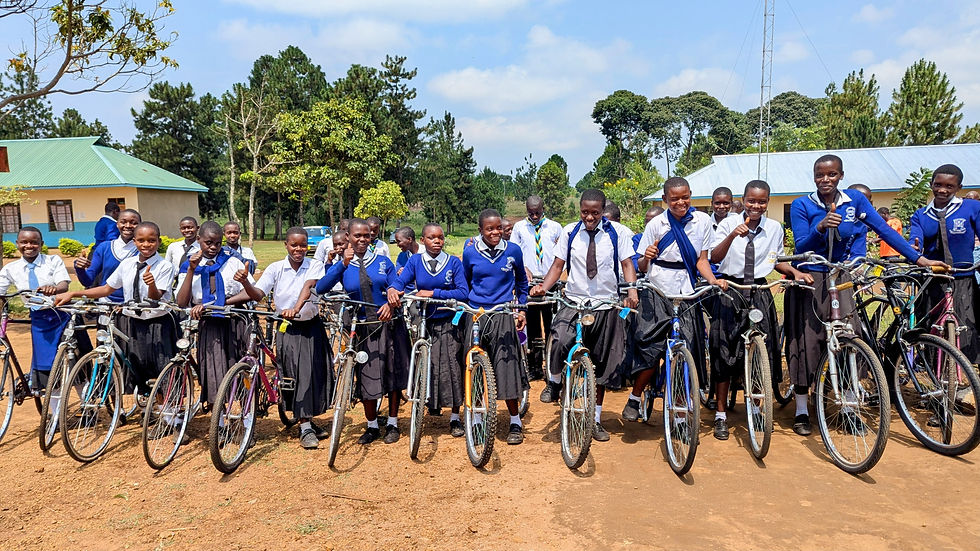
By reducing travel time from up to two hours on foot to approximately 30 minutes by bicycle, the project significantly improved punctuality, attendance, and student well-being.
Measurable Academic Progress
The impact of improved mobility has been both visible and measurable. Teachers report that students who were previously chronically late are now among the first to arrive at school assemblies. Reduced fatigue has translated into better classroom concentration and increased participation.
Academic records from participating schools indicate a notable shift in performance. Several beneficiaries who had previously been categorized in Division IV or Division 0 have progressed to Divisions I, II, and III. This improvement has enabled some students to qualify for Advanced Level secondary education and college programs—opportunities that would have been unlikely without reliable transportation.
These outcomes confirm a critical insight: distance is not simply a logistical inconvenience; it is a structural determinant of academic success.
Moving Beyond Distribution: Building Sustainable Systems
While distributing bicycles remains a core component, 2025 marked a strategic transition toward sustainability. With more than 1,200 bicycles distributed in previous years, reliance on two centralized mechanics proved insufficient to maintain the growing number of bicycles in use.
In response, VBC launched a decentralized, student-led bicycle maintenance model. A total of 400 students received training in essential mechanical skills, including puncture repair, brake adjustment, and gear maintenance. Forty-eight students were further supported to lead school-based repair clubs. Participating schools were equipped with toolboxes and essential spare parts, and maintenance logbooks were introduced to track service history.
This innovation has significantly reduced bicycle downtime and increased student ownership. Minor mechanical problems no longer result in prolonged absence from school. Importantly, girls actively participated in the technical training, challenging traditional gender stereotypes while gaining practical skills that enhance confidence and independence.
Strengthening Community Ownership
To promote sustainability and shared responsibility, VBC maintained a co-contribution model requiring a subsidized payment of TZS 50,000 per bicycle, payable in flexible installments. However, the 2025 cycle revealed the economic fragility of many rural households, particularly those dependent on seasonal agriculture.
Rather than exclude the most vulnerable students, VBC adapted its payment structure to allow extended and smaller installment contributions. This flexible approach preserved inclusivity while reinforcing community ownership of the program.
A Catalyst for Long-Term Change
Beyond improved grades, the broader socio-economic impact is evident. Parents report increased peace of mind knowing their children travel more safely and return home earlier. Teachers observe stronger discipline, improved attendance, and greater participation in extracurricular activities. Students themselves express renewed confidence and motivation.
The 2025 Bike to School initiative demonstrates that a bicycle is far more than a means of transport. It is a catalyst for educational equity, gender empowerment, and poverty interruption. By integrating targeted distribution, community contribution, and decentralized maintenance systems, VBC has developed a scalable and sustainable model that addresses both immediate needs and long-term resilience.
With the continued commitment of our primary and sole funding partner, Velafrica, and the opportunity for expanded donor investment to scale this proven approach, this model has the potential to reach thousands more students across Kagera Region and beyond - ensuring that no child’s academic future is determined by the distance they must walk.


Comments